
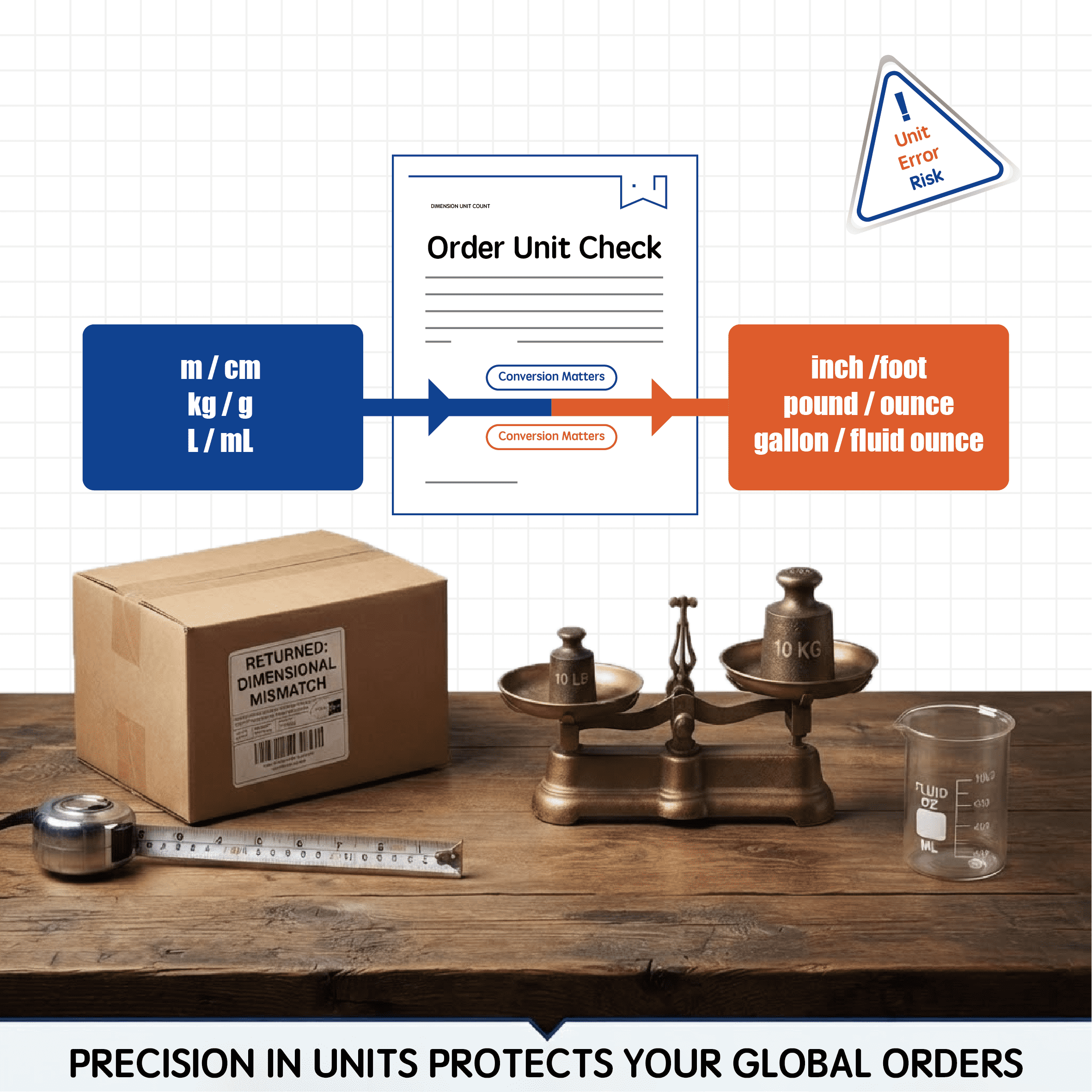






In international trade, unit specification differences between metric and imperial systems are a frequent yet underestimated cause of order errors, disputes and profit losses. Size, weight and capacity unit standards directly affect quotation accuracy, production compliance and delivery recognition across global markets. For foreign trade practitioners, mastering common unit conversions and regional usage habits is essential for stable order delivery and rational market judgment.
Most overseas order rejections do not stem from poor product quality, but from inaccurate unit conversion. Core industry fixed conversions are widely applied: 1 inch = 2.54 cm, 1 foot = 30.48 cm, 1 US gallon ≈ 3.785 L, 1 fluid ounce ≈ 29.57 mL. Many factories only follow domestic metric standards and ignore client imperial requirements. For example, a pipe exporter misproduced a 2-meter pipe for a 78.74-inch European order relying on experience instead of precise conversion, resulting in full-batch rejection and heavy rework and shipping losses. Similarly, daily chemical exporters often face complaints: a standard 5-gallon product (≈18.925 L) once filled only 15 L due to conversion negligence, causing payment deduction and terminated long-term cooperation. Garment export returns are also frequently triggered by mixed inch and centimeter sizing.
Weight unit mistakes are more likely to cause direct profit losses. Key conversions include: 1 pound ≈ 0.4536 kg, 1 kg = 2.2046 pounds, 1 ounce ≈ 28.35 g. In bulk raw material and fresh product trades, tiny conversion errors will be hugely magnified. A typical case is a trading company that prepared 1,000 kilograms of goods for a 1,000-pound U.S. supermarket order, causing severe overstock and extra warehousing costs. Sales teams often make two common mistakes: converting metric prices directly to imperial units leads to overquotation and lost orders, while underquotation causes net losses. In small-batch retail business, inaccurate gram-ounce conversion slows down order verification and gradually loses customer trust and repeat orders.
Unit adaptability is a basic threshold for entering segmented overseas markets. The metric system is mainstream in China and over 150 countries, while the U.S. and UK markets strictly adopt imperial units for contracts, product labels and packaging. Many new sales lose orders simply because they only provide metric data, failing to match local client habits. Mature export enterprises uniformly convert specifications according to target markets on quotations and documents, greatly improving order pass rates. Sticking to a single measurement system will inevitably limit overseas market expansion.
In homogeneous foreign trade competition, standardized unit management has become a hidden competitive advantage. Many manufacturers suffer batch returns and reputation damage due to inconsistent conversion standards across production batches. By contrast, excellent enterprises unify internal conversion rules and add double verification in order review and delivery links. This simple refined management effectively avoids operational risks, reduces unnecessary losses and builds professional credibility with clients.
In short, unit specification differences run through the whole order process. For foreign trade enterprises, standardized conversion processes and market-adaptive unit usage are not trivial details, but core guarantees to stabilize orders, control costs and maintain long-term competitiveness in cross-border markets.


